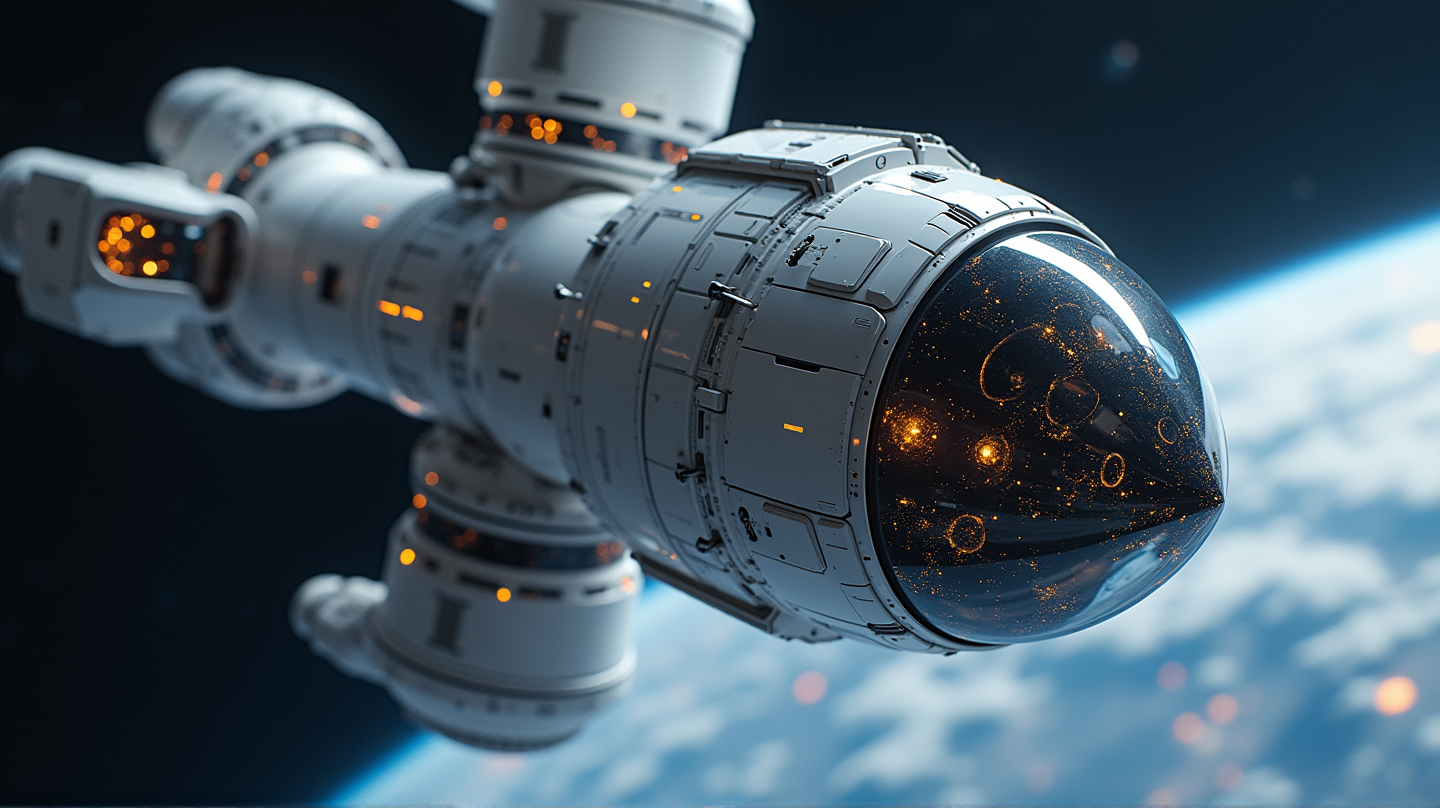
In an extraordinary leap for space exploration, artificial intelligence is now at the helm, piloting free-flying robots around the International Space Station (ISS). According to Space, this marks the first time AI has been utilized in such a capacity, unlocking new possibilities for the future of autonomous missions.
A Milestone in Microgravity Navigation
Steering a robot in the microgravity environment of the ISS is no small feat. Thanks to the pioneering work of Stanford researchers, autonomous robotics have ventured into this complex domain. By harnessing AI, the cube-shaped Astrobee robot navigated the crowded modules of the ISS, efficiently plotting routes with machine-learning expertise. This advancement signifies a revolution in how space robotics can operate with minimal human intervention.
The Innovators Behind the Breakthrough
Lead researcher Somrita Banerjee shared insights into the novel method leveraged by her team. Starting with conventional optimization techniques, they crafted a “warm start” system that learned from thousands of pre-calculated paths. This ensures that robots can pivot swiftly and safely amid the labyrinth of equipment aboard the station, fundamentally changing how robotics research can progress.
Hands-Off Experimentation on the ISS
Validating the system at NASA’s Ames Research Center set the stage for an in-orbit trial. In a fully operational scenario, astronauts prepared Astrobee for ground-commanded maneuvers, showcasing the AI model’s ability to reduce computation time dramatically by up to 60%. This experiment embodies the growing reliance on AI to streamline space operations, proposing a future where robots can autonomously conduct inspections and carry out logistics tasks beyond Earth’s bounds.
The New Age of Robotic Autonomy in Space
This landmark experiment opens the door to autonomous operations on future lunar and Martian missions. As robots travel farther from Earth, the need for built-in autonomy with unwavering safety is becoming a necessity rather than a novelty. “Autonomy with built-in guarantees is essential for the future of space robotics,” Banerjee concludes, pointing towards a future where AI-driven robots can act independently in distant realms.
As we stand on the threshold of this new era, the implications are immense, touching everything from mission planning to resource allocation. The groundwork laid by these innovations promises to make future space exploration both more frequent and more profound, a narrative only just beginning to unfold.