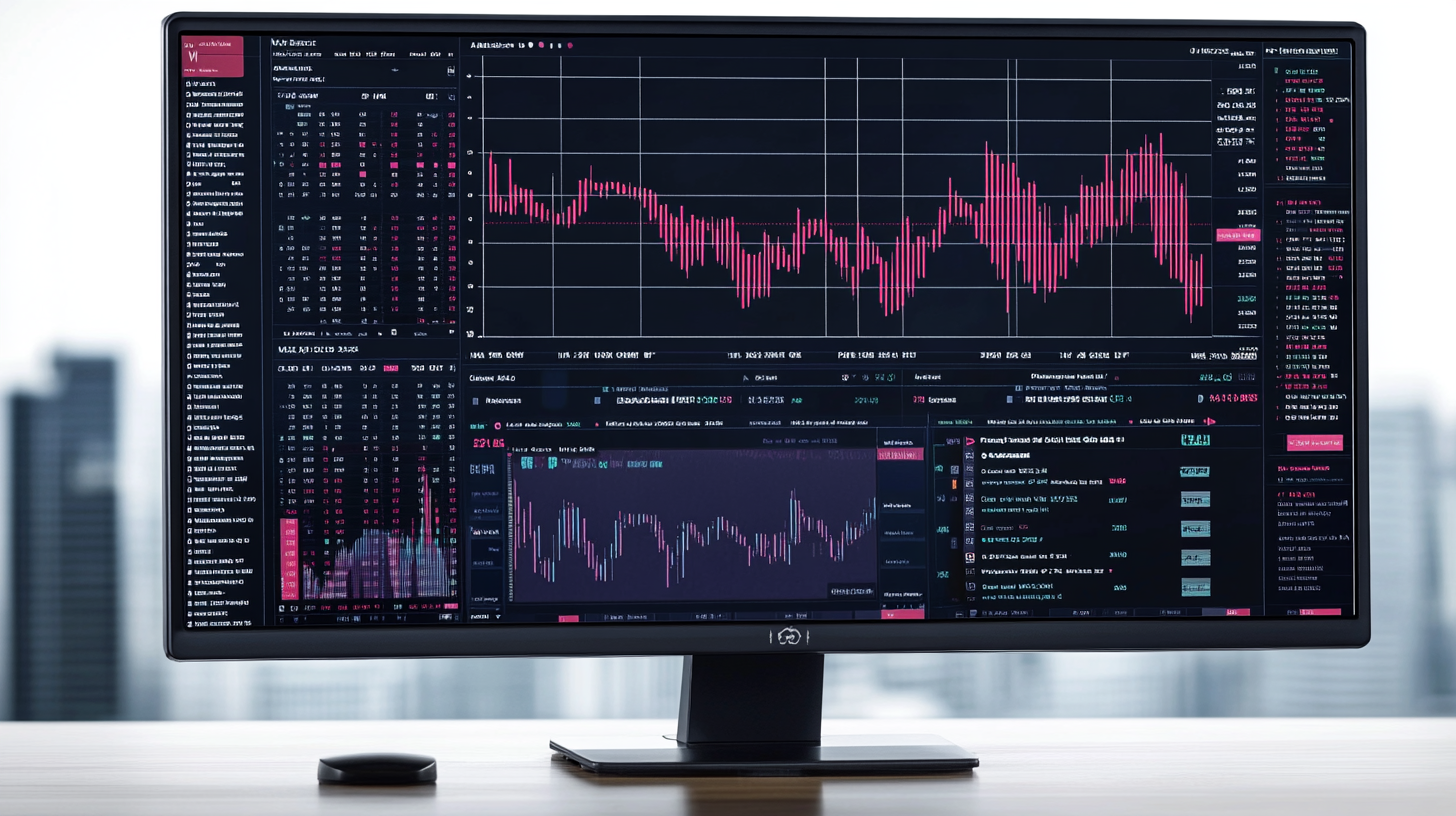
Devisal Monéta Trading Platform Alternatives 2026: Reliable Options for Online Traders
Speed is intoxicating in trading—especially when leverage is a click away and a WebTrader chart is whispering “just one more position.” That’s the pull of offshore CFD-first platforms, and it’s also why a lot of traders end up searching for cleaner, more transparent execution elsewhere. Publicly, Devisal Monéta is typically positioned as a Forex/CFD venue with a proprietary browser platform and mobile apps, offering a familiar menu: majors/minors in FX, a handful of indices and commodities, and (often in this segment) crypto CFDs. In practice, the decision point isn’t whether you can trade; it’s whether the total package—regulatory oversight, client-fund protections, order handling, and cost predictability—fits your risk budget.
Based on what’s commonly observed for offshore providers, Devisal Monéta appears aligned with an offshore framework (often marketed via jurisdictions such as Seychelles) and tends to emphasize high maximum leverage (commonly around 1:500) with a minimum deposit around $250. Typical “Standard” pricing in this category is frequently near ~2.0 pips on EUR/USD, with a tighter “Raw/ECN-style” tier sometimes paired with a per-trade commission. If you’re weighing Devisal Monéta alternatives, the core question for 2026 is simple: do you want a platform optimized for quick CFD access—or a regulated, auditable brokerage stack where protections like segregated client funds and compensation schemes can actually apply? This guide maps that choice set without hype, including a practical path to switch away from Devisal Monéta safely.
Disclaimer: This article is for informational purposes only and does not constitute investment advice. CFDs and other leveraged products can move fast against you and may result in losses that exceed your initial margin in some jurisdictions.
Key Takeaways (TL;DR)
- Offshore CFD platforms often prioritize leverage and onboarding speed; regulated brokers prioritize disclosures, safeguards, and verifiable oversight—choose based on your risk tolerance and strategy.
- Compare round-turn trading cost (spread + commission + expected slippage), not just headline “from 0.0 pips” marketing.
- If you want real stocks/ETFs (not CFD mirrors), start your shortlist with multi-asset brokers like IBKR or Saxo; most CFD venues won’t deliver shareholder rights.
- Migrate like an operator: open and KYC-verify the new account first, export statements, then withdraw using the original funding rail to avoid AML friction.
What Is Devisal Monéta and How Does Its Trading Platform Work?
On the spectrum from “full-stack brokerage” to “CFD interface,” Devisal Monéta sits closer to the latter: a trading service built around leveraged Forex and CFDs, typically offered under an offshore regulatory umbrella (commonly presented via the Seychelles FSA in this category). The product is tuned for retail traders who want fast access to margin trading rather than long-term investing features like corporate actions, exchange routing, or deep portfolio analytics. If your baseline expectation is a multi-asset account where you can own equities, trade options, and move cash in a highly audited environment, brokers similar to Devisal Monéta will usually feel lightweight by comparison.
Devisal Monéta Web Trading Platform: Core Features and Tools
The platform stack is usually a proprietary WebTrader with a companion iOS/Android app—functional, familiar, and designed to keep you in flow. Expect the essentials: multi-timeframe charting, a standard indicator set (trend, momentum, volatility), drawing tools, watchlists, and a basic positions/transactions panel. Order entry is typically market and pending orders (limits/stops), with a straightforward margin readout and an account dashboard for deposits, withdrawals, and KYC uploads. Where this tier often shows its seams is power tooling: strategy testing, programmable automation (EAs), advanced order types, and the kind of granular execution reporting that active traders use to diagnose slippage.
Trading Fees, Spreads, and Account Types at Devisal Monéta
Cost structure in this offshore CFD segment commonly splits into a “Standard” account and a tighter-spread tier marketed as Raw/Pro. A realistic reference point is EUR/USD around ~2.0 pips on the Standard setup; Raw-style pricing may advertise ~0.0–0.4 pips but typically adds a commission in the neighborhood of $6 round-turn. Beyond spreads, traders should model swap/overnight financing (especially for index CFDs), plus any withdrawal or inactivity charges that can quietly dominate the P&L for low-frequency accounts. The leverage headline (often up to 1:500) magnifies these costs because more notional exposure means more sensitivity to spreads, swaps, and micro-slippage.
When Do Traders Start Looking for Devisal Monéta Alternatives?
High leverage and a smooth WebTrader can feel like the future—until you need the boring stuff: a regulator you can verify, clearer dispute pathways, and execution reporting you can audit. That’s when Devisal Monéta alternatives start to look less like “switching platforms” and more like reducing operational risk. In 2026, the gap between offshore CFD venues and top-tier regulated brokers is not just branding; it’s how client money is handled, what protections exist if something breaks, and whether you can independently confirm the firm’s status on public registers.
- You want MT4/MT5 or cTrader to run an Expert Advisor/automation workflow, but the current proprietary WebTrader limits programmability and backtesting.
- Withdrawals feel unpredictable (timing, fees, or documentation loops), and you need a broker with clearer funding rails and audit trails.
- You’re scaling size and care more about execution model (STP/ECN/DMA vs. market maker) and measurable slippage than about maximum leverage.
- You want exposure to real stocks/ETFs (not stock CFDs), with corporate actions, voting rights, and transparent custody.
How to Choose a Reliable Alternative to the Devisal Monéta Trading Platform
Think of this selection process like designing a system: you’re minimizing failure modes, not chasing a single “best” feature. For alternatives to the Devisal Monéta trading platform, start with hard constraints (jurisdiction, regulation, product access), then optimize for strategy fit (execution, costs, tools). The end state should be a broker you can validate externally—on a regulator register, in disclosures, and in how they segregate client funds.
Regulation, Safety, and Investor Protection
Regulation is the trust layer. In the US/EU orbit, look for oversight you can independently confirm: FCA (UK), ASIC (Australia), CySEC (Cyprus/EU), or NFA/CFTC (US for FX). Investor-protection schemes matter too: the UK’s FSCS can cover eligible clients up to £85,000, and Cyprus’ ICF can cover up to €20,000 in certain cases. Also ask how the broker handles segregated client funds and whether negative balance protection applies in your region.
Available Markets and Instruments
Your instrument list should match your intent. If you mainly trade FX and index CFDs, a specialist with strong execution is fine. If you’re building a barbell portfolio—cash equities + options hedges + tactical FX—then multi-asset matters. Platforms like Devisal Monéta tend to be CFD-centric; that can be efficient for short-term positioning, but it won’t replace a broker that offers real stocks/ETFs, listed options, or futures where appropriate.
Trading Costs: Spreads, Commissions, and Other Fees
Trading cost is a stack, not a single number: spread, commission, swap/overnight financing, and occasional non-trading fees. For active strategies, the clean comparison is round-turn cost on your typical size—because “low spreads” can be offset by commissions or wider execution during volatility. If you scalp, also price in expected slippage; 0.2 pips of slippage can erase a “tight spread” advantage faster than most traders admit.
Platforms, Tools, and Execution Quality
Tooling is where edge hides. MT4/MT5 and cTrader support automation, custom indicators, and repeatable workflows; proprietary platforms can be slick but may cap extensibility. Execution model matters: market maker setups can be fine for many retail flows, while STP/ECN/DMA options may better suit latency-sensitive or size-sensitive traders. If you’re comparing competitors to Devisal Monéta, ask what reporting you get on fills, whether partial fills occur, and how the broker describes handling of volatile conditions.
Support, Education, and Overall User Experience
When something goes wrong, support is part of your risk controls. Prioritize brokers with multilingual coverage aligned to your hours, clear ticketing, and transparent escalation. Education also varies: some firms provide strong market structure content and platform training; others stop at basic glossary pages. Mobile parity matters too—if you manage risk on the move, you want full order management, alerts, and margin visibility in-app.
Devisal Monéta and Different Asset Classes: When Alternatives May Be Better
Devisal Monéta Forex and CFD Trading
For FX and CFDs, Devisal Monéta likely delivers the standard offshore bundle: roughly 30–50 FX pairs, around 8–15 indices, and a small commodities slate, paired with leverage that can run up to 1:500. The trade-off is usually cost transparency and execution diagnostics—especially if your strategy is sensitive to spread widening and slippage during news. Regulated FX/CFD specialists like Pepperstone and OANDA tend to be stronger choices when you care about platform depth (MT4/MT5/cTrader or robust proprietary tools), clearer disclosures, and the ability to validate regulatory status. If you’re building a rules-based system, that ecosystem—logs, reports, stable order handling—often matters more than a high leverage ceiling.
Devisal Monéta Stock and ETF Trading
This is where the fork in the road gets obvious. Many CFD-first venues either don’t provide real stock/ETF investing or only offer equities as CFDs—which means no shareholder rights, no direct participation in corporate actions the same way, and financing costs when held overnight. If your goal is “own great businesses” (yes, even as a trader), look at true multi-asset brokers like Interactive Brokers (IBKR) or Saxo Bank. Both are built around custody and exchange access, with broad global coverage of equities and ETFs, and more institutional-grade risk controls. For US/EU-focused investors, that distinction—ownership vs. derivative exposure—is often the single biggest reason to prioritize regulated substitutes for Devisal Monéta.
Devisal Monéta Crypto Trading
In this category, crypto exposure is commonly offered as crypto CFDs—price exposure without on-chain ownership, no wallet withdrawal, and no ability to use the asset in DeFi or custody it yourself. That can be acceptable for short-term speculation, but it’s not the same product as buying spot crypto. For regulated options vs Devisal Monéta, IG and Plus500 are examples of well-known providers that offer crypto CFDs in certain jurisdictions (availability varies by region and regulation). The practical angle: if you only need directional exposure, CFDs can work—but size your risk carefully because crypto volatility plus leverage is a fast path to margin calls.
Best Devisal Monéta Alternatives for 2026: Comparison of Top Trading Platforms
Interactive Brokers (IBKR): Key Facts and How It Compares to Devisal Monéta
Regulation: SEC/FINRA (US), FCA (UK), IIROC (Canada)
Markets: Stocks, ETFs, options, futures, bonds, FX
Fees: FX spreads often competitive; commissions vary by product/venue (transparent schedules)
Platform: Trader Workstation (TWS), IBKR Desktop/Mobile, Client Portal, API
Best For: Multi-asset investors who want real market access
Pepperstone: Key Facts and How It Compares to Devisal Monéta
Regulation: FCA (UK), ASIC (Australia), CySEC (Cyprus), DFSA (Dubai)
Markets: FX, CFDs (indices, commodities, some shares as CFDs)
Fees: Raw-style accounts commonly ~0.0–0.3 pips + commission; Standard often ~1.0+ pip equivalent
Platform: MT4, MT5, cTrader, TradingView (in supported regions)
Best For: System traders using MT4/MT5/cTrader automation
Saxo Bank: Key Facts and How It Compares to Devisal Monéta
Regulation: FCA (UK), MAS (Singapore), DFSA (Dubai)
Markets: Stocks, ETFs, bonds, options, futures, FX, CFDs
Fees: Pricing varies by tier; FX spreads generally competitive; commissions apply on exchange-traded products
Platform: SaxoTraderGO, SaxoTraderPRO
Best For: Portfolio-first traders who still want tactical derivatives
OANDA: Key Facts and How It Compares to Devisal Monéta
Regulation: CFTC/NFA (US), FCA (UK), ASIC (Australia), IIROC (Canada)
Markets: FX (and CFDs in certain jurisdictions)
Fees: Often spread-only pricing with competitive majors; costs depend on region and account setup
Platform: OANDA web/mobile, MT4 (availability by region)
Best For: Risk-managed FX trading with strong regulatory footprint
CMC Markets: Key Facts and How It Compares to Devisal Monéta
Regulation: FCA (UK), ASIC (Australia), BaFin (Germany)
Markets: CFDs (FX, indices, commodities, shares as CFDs)
Fees: Often competitive spread pricing on majors; additional costs can include financing on overnight CFD positions
Platform: Next Generation platform, mobile app (MT4 offered in some regions)
Best For: Active CFD traders who value research and charting depth
eToro: Key Facts and How It Compares to Devisal Monéta
Regulation: FCA (UK), CySEC (Cyprus), ASIC (Australia)
Markets: Stocks, ETFs, CFDs (including FX and crypto CFDs in certain regions)
Fees: Typically spread-based on CFDs; stock investing terms vary by country and product
Platform: eToro web and mobile platform
Best For: Social-first investing and copy-trading style workflows
Comparison Summary
| Platform | Regulation | Main Markets | Typical Costs | Best For |
|---|---|---|---|---|
| Interactive Brokers (IBKR) | SEC/FINRA, FCA, IIROC | Stocks/ETFs, options, futures, bonds, FX | Transparent commissions; competitive FX pricing varies by pair/venue | Multi-asset investors who want real market access |
| Pepperstone | FCA, ASIC, CySEC, DFSA | FX and CFDs | Raw ~0.0–0.3 pips + commission; Standard ~1.0+ pip equivalent | System traders using MT4/MT5/cTrader automation |
| Saxo Bank | FCA, MAS, DFSA | Stocks/ETFs, options, futures, FX, CFDs | Tiered pricing; spreads/commissions depend on product and account level | Portfolio-first traders who still want tactical derivatives |
| OANDA | CFTC/NFA, FCA, ASIC, IIROC | FX (and some CFDs by region) | Often spread-only; majors generally competitive (region-dependent) | Risk-managed FX trading with strong regulatory footprint |
| CMC Markets | FCA, ASIC, BaFin | CFDs across FX/indices/commodities/shares | Competitive spreads on majors; overnight financing on CFDs | Active CFD traders who value research and charting depth |
| eToro | FCA, CySEC, ASIC | Stocks/ETFs + CFDs (region-dependent) | Spread-based CFD pricing; investing fees vary by product/country | Social-first investing and copy-trading style workflows |
How to Safely Move from Devisal Monéta to Another Broker
Switching brokers is less “account setup” and more “operational migration,” like moving cloud infrastructure: do it in phases, keep logs, and avoid downtime. Devisal Monéta alternatives can reduce counterparty and execution risk, but only if you migrate without forcing liquidations or triggering funding delays. Treat leverage as the hazard: close exposure deliberately and test the new venue before you scale back up. If you’re coming from Devisal Monéta, plan the move while markets are calm—not during a CPI print.
- Verify the new broker on the official register (FCA Register, ASIC Connect, CySEC directory, or NFA BASIC) and confirm the legal entity matches the onboarding paperwork.
- Open the new account and complete KYC/AML first (government ID + proof of address), so you’re not stranded mid-withdrawal waiting on approvals.
- Export statements, confirmations, and full trade history for your records and taxes; save them locally before you change account status.
- Reduce risk on the old account: close open CFD positions intentionally rather than letting margin calls decide your exit price.
- Request withdrawals using the same funding method used to deposit where possible, since many processors enforce source-of-funds rules; keep screenshots of submission confirmations.
Ready to Explore Devisal Monéta?
If you’re still evaluating fit, start by checking regional eligibility, the platform stack, and the funding workflow in your jurisdiction. Then compare that experience against regulated options with verifiable oversight and clearer cost disclosure—especially if you trade with leverage or hold positions overnight.
FAQ: Devisal Monéta Alternatives and Trading Platforms
What is the best alternative to Devisal Monéta in 2026?
The best alternative depends on whether you want real multi-asset investing or primarily FX/CFDs. For real stocks/ETFs and deep market access, Interactive Brokers (IBKR) is hard to beat; for FX/CFD execution and automation tooling, Pepperstone is a strong benchmark. If your priority is research and a powerful CFD interface, CMC Markets is a credible contender among the best Devisal Monéta alternatives 2026.
Is Devisal Monéta a safe broker/platform?
Devisal Monéta appears to operate under an offshore framework commonly associated with the Seychelles FSA, which generally provides fewer investor protections than FCA/ASIC/CySEC/NFA-regulated brokers. That doesn’t automatically mean fraud, but it does mean you may have less robust recourse, fewer compensation mechanisms, and weaker transparency requirements compared with top-tier regulated platforms. If safety is your first constraint, prioritize regulated options vs Devisal Monéta and validate the entity on the regulator’s public register.
Can I trade stocks, futures, or crypto with Devisal Monéta?
With platforms like Devisal Monéta, access is usually centered on Forex and CFDs, and stock exposure—if offered at all—is often via CFDs rather than owning shares. Futures are typically a gap for CFD-first offshore brokers, whereas multi-asset firms like IBKR or Saxo are designed for listed futures and options. Crypto, when available, is commonly delivered as crypto CFDs (price exposure, not on-chain ownership).
What should I check before switching from Devisal Monéta to another platform?
Before switching, confirm the new broker’s regulator and legal entity on the official register, then complete KYC so withdrawals and deposits don’t get stuck mid-process. Next, compare execution and total costs (spread + commission + swap + typical slippage) using your real trade sizes, not marketing examples. Finally, export your history and close open exposure on Devisal Monéta in a controlled way so leverage doesn’t force an ugly exit.
About the Author: Michael Chang is a Stanford-trained CS + MBA investor based in Silicon Valley, focused on how technology shapes markets and trading infrastructure. He writes from the perspective of a practitioner: risk systems first, tooling second, and only then the trade idea.