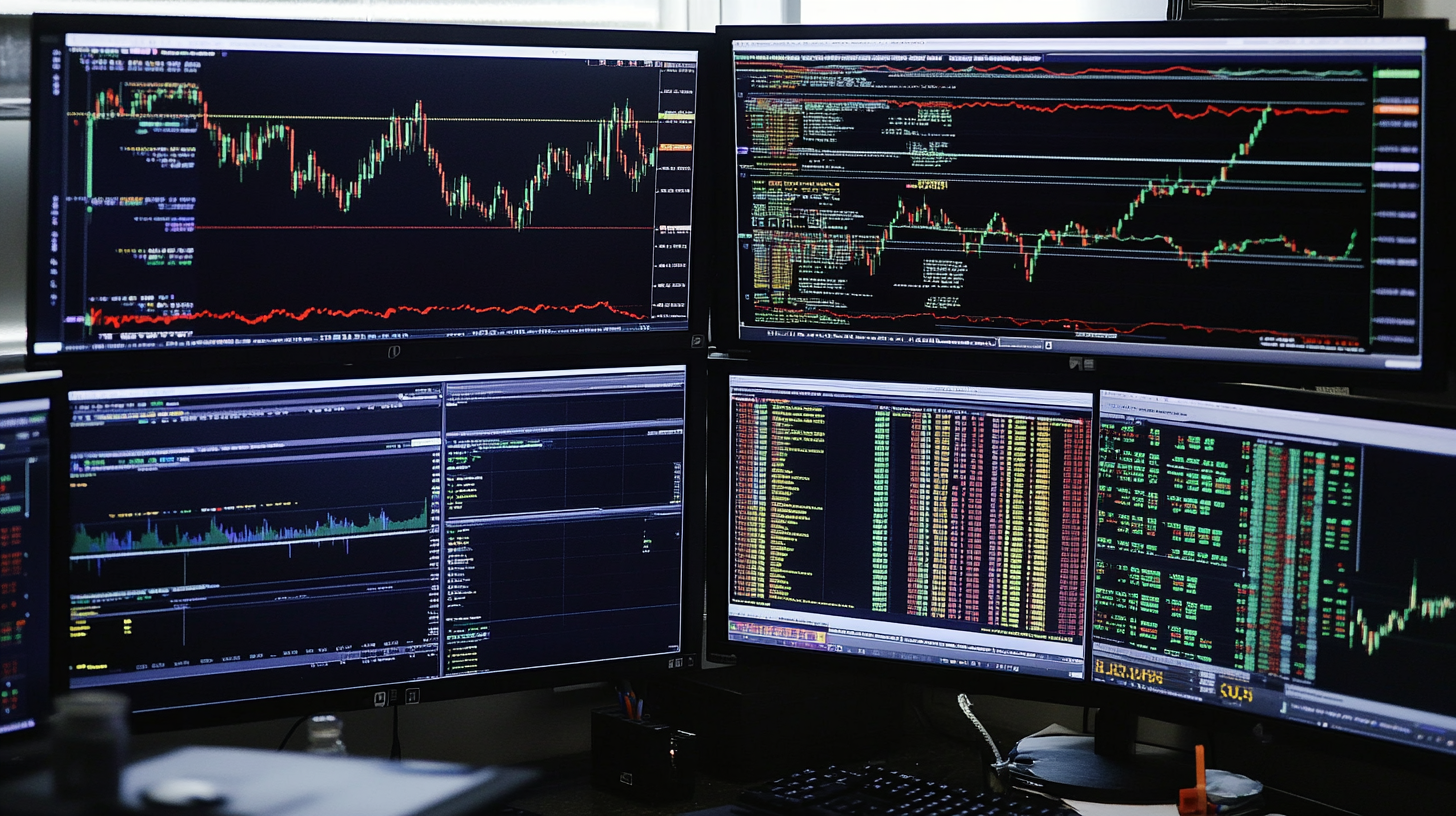
Falkemar Dornhausen Trading Platform Alternatives 2026: Reliable Options for Online Traders
Leverage can feel like a cheat code—right up until it isn’t. That tension is why I take “broker choice” personally: the platform you pick becomes part of your risk engine, not just your UI. Falkemar Dornhausen tends to show up in the same corners of the internet as other offshore CFD venues: a proprietary WebTrader, a mobile app, and an account offering that’s geared toward fast onboarding and high leverage rather than deep market access. Based on what’s commonly observable for this category, trading is typically centered on forex and CFDs (often including crypto CFDs), with a minimum deposit around $250, leverage that can reach roughly 1:500, and a typical EUR/USD spread around 2.0 pips on a standard-style account.
That setup can be “good enough” for a casual, small-size speculator. But for anyone running real position sizing, systematic execution, or tax-aware portfolio decisions, friction matters: execution model clarity, withdrawal reliability, segregation of client funds, and what happens when something breaks. That’s where Falkemar Dornhausen starts to invite comparisons—and where credible Falkemar Dornhausen alternatives become the more rational choice for 2026.
In this guide, I’ll map alternatives to the Falkemar Dornhausen trading platform by strategy fit: FX/CFD cost structure, platform stack (MT4/MT5/cTrader vs proprietary), and the big one—regulatory protections like FCA oversight and investor compensation schemes (FSCS/ICF) that can change outcomes in worst-case scenarios.
Disclaimer: This article is for informational purposes only and does not constitute investment advice. CFDs and other leveraged products carry a high risk of loss and may not be suitable for all investors.
Key Takeaways (TL;DR)
- If you need real stocks/ETFs (not equity CFDs), prioritize multi-asset venues like Interactive Brokers or Saxo Bank over CFD-first platforms.
- Compare “round-turn” trading cost (spread + commission), not headline leverage—2.0 pips vs 0.2 pips can dominate P&L for active FX traders.
- Do KYC at the new broker first; then withdraw using the same funding rail you deposited with to avoid AML-related delays.
What Is Falkemar Dornhausen and How Does Its Trading Platform Work?
On the spectrum from “full-service, regulated brokerage” to “offshore CFD shop,” Falkemar Dornhausen appears to sit closer to the latter. The product mix is typically built around forex pairs and CFD instruments (indices, commodities, and frequently crypto CFDs), with a streamlined onboarding flow aimed at retail traders who want simple access and higher leverage. Public-facing signals for brokers similar to Falkemar Dornhausen often include offshore registration, limited transparency around execution model, and a platform stack that’s proprietary-first rather than centered on third-party ecosystems used by systematic traders.
Falkemar Dornhausen Web Trading Platform: Core Features and Tools
Expect a browser-based WebTrader that covers the essentials: price charts, basic indicators, and standard order entry. Charting typically supports common timeframes and a modest set of drawing tools (trend lines, horizontal levels), but power features—custom scripting, deep strategy testing, or professional-grade analytics—are rarely the focus in this segment. Mobile parity is usually decent for monitoring and simple execution: watchlists, position management, and deposit/withdrawal controls inside the app. Where these platforms often diverge from institutional-grade stacks is workflow: fewer order types (e.g., limited advanced conditional orders), less visibility into execution quality, and a “good enough” dashboard rather than a portfolio cockpit.
Trading Fees, Spreads, and Account Types at Falkemar Dornhausen
Costs are commonly packaged in spread-first terms. A typical reference point for EUR/USD on a standard-style account is around 2.0 pips, which can be expensive if you trade frequently or scalp. Some brokers in this category also advertise a tighter “raw/ECN-like” tier, where spreads can compress toward ~0.0–0.4 pips but a commission is charged (often in the neighborhood of $6–$8 round-turn per standard lot). Beyond spreads, pay attention to swap/overnight financing on CFDs, potential withdrawal fees, and any inactivity rules—these are the silent line items that show up after the adrenaline fades.
When Do Traders Start Looking for Falkemar Dornhausen Alternatives?
Strategy maturity is the usual trigger. Once you move past “click and pray” trading, you start demanding auditability: clear pricing, predictable execution, and a regulator with teeth if there’s a dispute. That’s why Falkemar Dornhausen alternatives often enter the conversation after a trader experiences slippage that’s hard to reconcile, platform limitations that block automation, or operational friction around deposits and withdrawals. The other catalyst is scope: if you want to combine FX/CFDs with real equities or options, offshore CFD-first venues can feel like trying to build a modern portfolio with a 2009 toolkit.
- You want MT4/MT5 or cTrader to run an EA, copy framework, or a rules-based FX system with reproducible logs.
- You’re scaling volume and the all-in cost of ~2.0 pips on EUR/USD is dragging performance more than your entries.
- You need regulator-verified protections (segregated client funds, negative balance protection where applicable, formal complaints paths).
- Withdrawals start taking longer than expected, or the broker repeatedly routes you to “alternative” payout methods.
How to Choose a Reliable Alternative to the Falkemar Dornhausen Trading Platform
I treat broker selection like picking cloud infrastructure: failure modes matter more than the landing page. For alternatives to the Falkemar Dornhausen trading platform, build a shortlist around your strategy (holding period, automation, asset needs), then stress-test each candidate on regulation, cost of trade, and execution quality—not marketing promises.
Regulation, Safety, and Investor Protection
Start with the regulator, not the spread. FCA (UK), ASIC (Australia), CySEC (EU), and NFA/CFTC (US) each enforce different standards, but all are meaningfully tighter than offshore regimes. In the UK, FSCS protection can apply up to £85,000 for eligible clients under certain failure scenarios; in Cyprus, ICF coverage can extend up to €20,000 depending on client classification and circumstances. Also look for segregated client funds policies and whether negative balance protection is offered for retail clients in your jurisdiction.
Available Markets and Instruments
Ask a blunt question: do you want exposure, or ownership? Many platforms like Falkemar Dornhausen focus on CFDs—useful for tactical trading, but not the same as holding real stocks/ETFs with shareholder rights. If your plan is “AI winners + macro hedges,” you’ll likely want a broker that supports equities and ETFs alongside FX/CFDs, and possibly options or futures for defined-risk structures. Match the instrument set to your portfolio design, not your impulse.
Trading Costs: Spreads, Commissions, and Other Fees
Measure cost the way prop desks do: round-turn cost per trade. A raw account might show 0.1–0.3 pip spreads but add a commission; a standard account might bundle costs into a wider spread. Add swap/overnight financing for holds longer than a session, and watch for non-obvious fees (inactivity, conversion, withdrawals). If you’re doing 50–200 FX trades a month, the difference between ~2.0 pips and ~0.7 pips is not “small”—it’s often the entire edge.
Platforms, Tools, and Execution Quality
Platform choice is strategy choice. MT4/MT5 and cTrader support automation, custom indicators, and a broader ecosystem, while proprietary WebTraders are usually optimized for manual execution. Then there’s the execution model: market maker vs STP/ECN/DMA. The label isn’t everything, but it shapes how orders are filled, where slippage can show up, and how transparent pricing feels during volatility. If you’re migrating away from Falkemar Dornhausen, insist on broker-side disclosures that match your trade style—especially around re-quotes, execution venues, and order handling.
Support, Education, and Overall User Experience
Support quality is operational alpha. Look for multi-language coverage aligned with your time zone, clear ticketing, and documented response times. Education is a nice-to-have, but platform reliability and clean statements matter more when you’re doing taxes or reconciling strategy performance. Finally, ensure mobile and web experiences don’t diverge: if risk management is on the phone and execution is on desktop, inconsistency can become an unforced error.
Falkemar Dornhausen and Different Asset Classes: When Alternatives May Be Better
Falkemar Dornhausen Forex and CFD Trading
Forex and index/commodity CFDs are the “home turf” for brokers in this category. Falkemar Dornhausen likely offers a mid-sized list—roughly a few dozen FX pairs plus a handful of indices and commodities—paired with high leverage (around 1:500). The trade-off is usually cost and transparency: a typical EUR/USD spread near 2.0 pips can be a deal-breaker for active traders, and execution details can be harder to validate. If your workflow is price-sensitive, Pepperstone and IC Markets are common upgrades: both support MT4/MT5/cTrader and are built for tighter pricing via raw-style accounts (spreads often near zero with commission). For traders who prioritize strong oversight and a long operating footprint in CFDs, IG is frequently selected for robust risk tools and broad index CFD coverage (region-dependent).
Falkemar Dornhausen Stock and ETF Trading
This is where the gap usually becomes obvious. Offshore CFD-first brokers often provide “stocks” as CFDs—synthetic exposure with financing costs and no shareholder rights—rather than direct market access. If you’re constructing a real portfolio (AI infrastructure names, semis, or global ETFs) and want to hold positions cleanly, multi-asset brokers are the natural substitutes for Falkemar Dornhausen. Interactive Brokers is the pro baseline here: global equities/ETFs, options, futures, bonds, and FX in one account, with routing and reporting that scales as your complexity grows. Saxo Bank is another high-trust choice for investors who want research-grade tooling and broad market access without living inside a pure CFD wrapper. For US readers especially, this distinction—CFD exposure vs real securities custody—can be the difference between “trading” and “investing.”
Falkemar Dornhausen Crypto Trading
Crypto on these platforms is typically offered as CFDs: you’re trading price movement, not taking on-chain delivery, and you won’t be withdrawing BTC/ETH to a wallet. That can be fine for short-term hedges or volatility trades, but it’s a different risk profile—counterparty risk plus leverage risk, with overnight fees potentially in play. Regulated CFD brokers like Plus500 and IG (availability varies by jurisdiction) are often used for crypto CFD exposure with more formal compliance expectations and clearer risk disclosures. If your objective is long-term ownership, a broker specializing in real securities won’t automatically solve that—equity brokers are not crypto exchanges. The right move is to separate goals: use a regulated broker for FX/CFDs and real stocks/ETFs, and consider dedicated, appropriately regulated crypto venues for custody (where permitted).
Best Falkemar Dornhausen Alternatives for 2026: Comparison of Top Trading Platforms
Interactive Brokers (IBKR): Key Facts and How It Compares to Falkemar Dornhausen
Regulation: SEC/FINRA (US), FCA (UK), IIROC (Canada) (entity depends on region)
Markets: Stocks, ETFs, options, futures, bonds, FX; CFDs in some regions
Fees: FX pricing varies by schedule; equities typically low per-share or tiered pricing (region-dependent)
Platform: Trader Workstation (TWS), IBKR Desktop/Mobile, Client Portal APIs
Best For: Global multi-asset builders who want real market access
Pepperstone: Key Facts and How It Compares to Falkemar Dornhausen
Regulation: FCA, ASIC, CySEC, DFSA (entity depends on region)
Markets: FX and CFDs (indices, commodities, some crypto CFDs where available)
Fees: Standard spreads often ~1.0+ pip on EUR/USD; Razor/Raw-style pricing can be ~0.0–0.3 pips + commission (varies by entity)
Platform: MT4, MT5, cTrader, TradingView integration (availability varies)
Best For: Execution-sensitive FX traders running systematic playbooks
Saxo Bank: Key Facts and How It Compares to Falkemar Dornhausen
Regulation: FCA, MAS, DFSA (entity depends on region)
Markets: Stocks, ETFs, bonds, options, futures, FX, and CFDs
Fees: Pricing depends on account tier and market; FX spreads and commissions vary by region and volume
Platform: SaxoTraderGO, SaxoTraderPRO
Best For: Research-driven investors who want a premium multi-asset stack
IC Markets: Key Facts and How It Compares to Falkemar Dornhausen
Regulation: ASIC, CySEC; FSA Seychelles (group-level entity options vary)
Markets: FX and CFDs (indices, commodities, crypto CFDs where available)
Fees: Raw spreads often ~0.0–0.3 pips on EUR/USD + commission; Standard accounts typically wider (varies by platform/entity)
Platform: MT4, MT5, cTrader
Best For: High-frequency scalpers optimizing spread + latency
IG: Key Facts and How It Compares to Falkemar Dornhausen
Regulation: FCA, ASIC, MAS (entity depends on region)
Markets: CFDs across FX, indices, commodities, shares (often as CFDs); some regions offer broader investing access
Fees: Costs vary by instrument; FX spreads often competitive for major pairs (exact pricing depends on region/account)
Platform: IG web platform, mobile apps; MT4 available in some regions
Best For: Risk-managed CFD traders who value robust oversight
Plus500: Key Facts and How It Compares to Falkemar Dornhausen
Regulation: FCA, CySEC, ASIC, MAS (entity depends on region)
Markets: CFDs on FX, indices, commodities, shares, and crypto (availability varies)
Fees: Spread-only pricing model; typical spreads depend on instrument and volatility conditions
Platform: Plus500 proprietary WebTrader and mobile app
Best For: Mobile-first beginners who want a clean CFD interface
Comparison Summary
| Platform | Regulation | Main Markets | Typical Costs | Best For |
|---|---|---|---|---|
| Interactive Brokers (IBKR) | SEC/FINRA, FCA, IIROC (by entity) | Real stocks/ETFs, options, futures, bonds, FX | Low, schedule-based pricing; varies by product/region | Global multi-asset builders who want real market access |
| Pepperstone | FCA, ASIC, CySEC, DFSA (by entity) | FX + CFDs (indices/commodities; some crypto CFDs) | Raw ~0.0–0.3 pips + commission; Standard ~1.0+ pip | Execution-sensitive FX traders running systematic playbooks |
| Saxo Bank | FCA, MAS, DFSA (by entity) | Stocks/ETFs, options, futures, FX, CFDs | Tiered pricing; FX spreads/commissions vary by tier/region | Research-driven investors who want a premium multi-asset stack |
| IC Markets | ASIC, CySEC; FSA Seychelles (entity options vary) | FX + CFDs (indices/commodities; some crypto CFDs) | Raw ~0.0–0.3 pips + commission; Standard wider spreads | High-frequency scalpers optimizing spread + latency |
| IG | FCA, ASIC, MAS (by entity) | CFDs on FX/indices/commodities/shares; broader access varies | Instrument-dependent; major FX pairs often competitive | Risk-managed CFD traders who value robust oversight |
| Plus500 | FCA, CySEC, ASIC, MAS (by entity) | CFDs across FX/indices/commodities/shares/crypto (varies) | Spread-only; pricing moves with volatility and instrument | Mobile-first beginners who want a clean CFD interface |
How to Safely Move from Falkemar Dornhausen to Another Broker
Switching brokers isn’t a “close tab, open tab” event—it’s an operational process with real risk. Treat it like migrating production systems: preserve records, reduce exposure during the move, and validate the new environment with small tests before scaling. If you’re coming from Falkemar Dornhausen, assume you’ll be rebuilding positions rather than transferring them, and remember that leverage amplifies mistakes as efficiently as it amplifies returns.
- Confirm the new broker’s entity on the regulator’s public register (FCA Register, ASIC Connect, CySEC register, or NFA BASIC) and match the legal name, not just the brand.
- Create the new account and complete KYC/AML verification (ID + proof of address) before you initiate large withdrawals elsewhere; this reduces “funds in limbo” time.
- Export statements, trade history, and funding records from the old account while you still have dashboard access—this is valuable for taxes and dispute resolution.
- Flatten risk on the old platform by closing open leveraged positions, or hedge and re-enter on the new broker; don’t assume any position transfer mechanism exists between venues.
- Request a full withdrawal using the original deposit method where possible; many brokers enforce same-rail withdrawals as part of AML controls.
- Start the new broker relationship with a small deposit and a handful of low-size trades to evaluate spreads, slippage, and platform stability during normal and fast markets.
Ready to Explore Falkemar Dornhausen?
If you’re still evaluating your options, review the current onboarding steps, platform features, and regional eligibility directly, then compare them against regulated substitutes on costs and market access. A few minutes of verification can save weeks of operational pain later.
FAQ: Falkemar Dornhausen Alternatives and Trading Platforms
What is the best alternative to Falkemar Dornhausen in 2026?
The best alternative depends on whether you’re optimizing for real multi-asset investing or low-cost FX/CFD execution. For real stocks/ETFs plus derivatives, Interactive Brokers and Saxo Bank are often the cleanest upgrades; for FX/CFD pricing and platform choice, Pepperstone or IC Markets are typical picks. If you want a simpler CFD-only interface with strong regulatory oversight, Plus500 can fit that narrower use case.
Is Falkemar Dornhausen a safe broker/platform?
Falkemar Dornhausen appears consistent with an offshore/unregulated-or-lightly-regulated CFD framework rather than a top-tier regime like the FCA, ASIC, CySEC, or NFA. That doesn’t automatically mean “fraud,” but it usually means fewer enforceable investor protections and less recourse if there’s a dispute. If safety is your priority, regulated options vs Falkemar Dornhausen—especially FCA/CySEC entities with segregation rules and formal complaint pathways—tend to offer stronger guardrails.
Can I trade stocks, futures, or crypto with Falkemar Dornhausen?
With brokers in this segment, “stocks” are commonly offered as CFDs rather than real share ownership, and futures access is often limited or not offered in the same way as at multi-asset brokers. Crypto exposure is frequently via crypto CFDs—price speculation without on-chain custody. If you need real stocks/ETFs and exchange-traded futures, competitors to Falkemar Dornhausen like Interactive Brokers are better aligned with that requirement.
What should I check before switching from Falkemar Dornhausen to another platform?
Before switching, verify the new broker’s exact legal entity on the regulator’s register and confirm which protections apply (segregated funds, negative balance protection, and compensation schemes like FSCS/ICF where relevant). Next, compare round-turn trading costs (spread + commission) against your own volume, not a brochure scenario. Finally, test execution with small trades—slippage and platform stability are where “Falkemar Dornhausen trading platform alternatives 2026” separate into serious venues versus shiny UIs.
About the Author: Michael Chang is a Stanford-trained (CS + MBA) Silicon Valley investor who approaches trading platforms the way engineers evaluate infrastructure: incentives, failure modes, and measurable performance. He writes about markets with a focus on risk controls, execution quality, and how modern investors blend real assets with tactical hedges. He’s especially interested in where fintech and AI change the edge—and where they don’t.