Faredione Review 2026: Pros, Cons, and Features Tested
| Min Deposit | $200 |
| Max Leverage | 1:500 |
| Assets | Forex, Indices, Commodities, Crypto CFDs, Share CFDs |
| Platforms | Proprietary WebTrader + iOS/Android mobile apps |
Built for CFD traders who want a multi-asset cockpit with high leverage, Faredione fits best if you prioritize access and speed over Tier‑1 regulatory guardrails—because the headline trade-off is an offshore setup. In my 2026 hands-on run, the broker pushed a clean two-tier model (spread-only Standard vs. commission-based Raw) with a familiar set of majors, indices, metals, and crypto CFDs. The WebTrader is the center of gravity, and the mobile stack is good enough to manage risk on the go. The unique selling point is aggressive margin flexibility paired with a UI that feels more “fintech” than legacy terminals. The drawback: fewer investor protections and a lighter research/education layer than top regulated incumbents. I opened and funded an account directly via Faredione to validate the end-to-end flow.
Pros
- Raw-style pricing option with tight headline spreads for active FX traders
- Broad CFD menu (FX, indices, metals, crypto) from one account
- Mobile app supports funding and position management without feeling like an afterthought
Cons
- Operates under offshore oversight, so escalation paths are thinner than FCA/ASIC-style regimes
- Platform ecosystem is proprietary; MT4/MT5 compatibility isn’t something I could confirm
- Dormant accounts can pick up an inactivity charge, which adds friction for “set-and-forget” users
Is Faredione Legit and Safe?
Faredione came across as an operational broker rather than a “vanish-after-deposit” setup, and my withdrawal test processed within the stated window. That said, it’s not a Tier‑1 regulated venue, so “safe” depends on how comfortable you are with an offshore framework and higher leverage.
One thing I look for first is whether the compliance rails exist before money moves. In my onboarding, identity verification was enforced (photo ID plus proof of address) and the dashboard displayed segregated-funds language in the client area—useful, even if offshore enforcement can be more variable than in the UK/EU. The registration posture I observed aligns with a Mauritius FSC-style offshore model: you often get looser leverage caps and faster product iteration, but you usually give up robust compensation schemes and easier formal dispute resolution. I also ran a quick red-flag scan: no fake “instant award” pop-ups, no aggressive sales calls after deposit, and no pressure to take a bonus. Still, CFDs are leveraged products; most retail traders lose money, and margin can amplify mistakes as easily as it amplifies wins.
Supported Countries & Restricted Regions
This broker primarily accepts clients across international markets where offshore CFD trading is permitted, with the USA and sanctioned jurisdictions blocked. Availability is ultimately KYC-driven, so your residency and documents decide the final outcome.
| Region | Status | Leverage Cap |
|---|---|---|
| Latin America (selected countries) | Accepted | Up to 1:500 |
| MENA (where permitted) | Accepted | Up to 1:500 |
| Southeast Asia (selected countries) | Accepted | Up to 1:500 |
| Non‑EU Europe (selected) | Accepted | Up to 1:500 |
| USA | Restricted | Not offered |
| Sanctioned jurisdictions | Restricted | Not offered |
Expect eligibility checks to happen via IP signals and, more importantly, document review during KYC/AML. Policies can move as regulators update guidance, so re-check access right before funding.
Tradable Assets and Markets
Faredione feels FX-and-index centric, with commodities and crypto CFDs positioned as tactical satellites rather than the core identity. The lineup is broad enough to run a macro playbook (USD + rates + risk) from one margin account.
- Indices: Major benchmarks like US500 and NAS100 are there for beta exposure and event-driven trading around earnings seasons and Fed weeks.
- Forex: 40+ pairs across majors and a handful of exotics, suitable for both carry-style holds and intraday scalps.
- Commodities: Gold and crude (WTI/Brent) are available, which matters if you hedge inflation/risk-off regimes.
- Crypto CFDs: BTC and ETH are the mainstays, with a few large-cap coins for volatility seekers.
- Share CFDs: A curated list of US/EU blue chips for single-name speculation without owning the underlying shares.
All of this is CFD exposure: you’re trading price movement, not taking delivery of assets or gaining shareholder voting rights. With crypto CFDs specifically, you’re not moving coins on-chain—you’re trading a derivative contract with financing dynamics.
Faredione Trading Fees and Spreads
The cost structure splits cleanly into a spread-only Standard account and a Raw/ECN-style option with a low spread plus a per-lot commission. On my test account, headline pricing landed in the “competitive offshore CFD broker” band—good enough for active trading, but not always the absolute cheapest after financing.
| Asset | Spread/Fee | Market Average Comparison |
|---|---|---|
| EUR/USD (Standard) | From 1.5 pips | In line with typical spread-only CFD accounts |
| EUR/USD (Raw/ECN) | From 0.2 pips + $7 round-turn/lot | Competitive for active FX, especially at scale |
| Bitcoin (BTC/USD) | From $28 | Average; can widen materially in fast markets |
| Gold (XAU/USD) | From $0.35 | Slightly better than many entry-tier CFD offerings |
| US500 Index | From 0.8 points | Broadly standard for offshore index CFDs |
Non-spread costs that matter: Overnight financing (swap) is the real P&L tax if you hold CFDs for days, and it’s instrument-dependent—crypto weekend financing stood out as the most impactful. The provider also applies a $10/month inactivity fee after 90 days without trading, which can quietly nibble at small balances. Finally, funding in a non-USD base currency can introduce conversion costs at the payment rail or on the broker side, so I’d treat “cheap spreads” as only one variable in the total cost-of-trade equation.
Faredione Trading Platforms and Tools
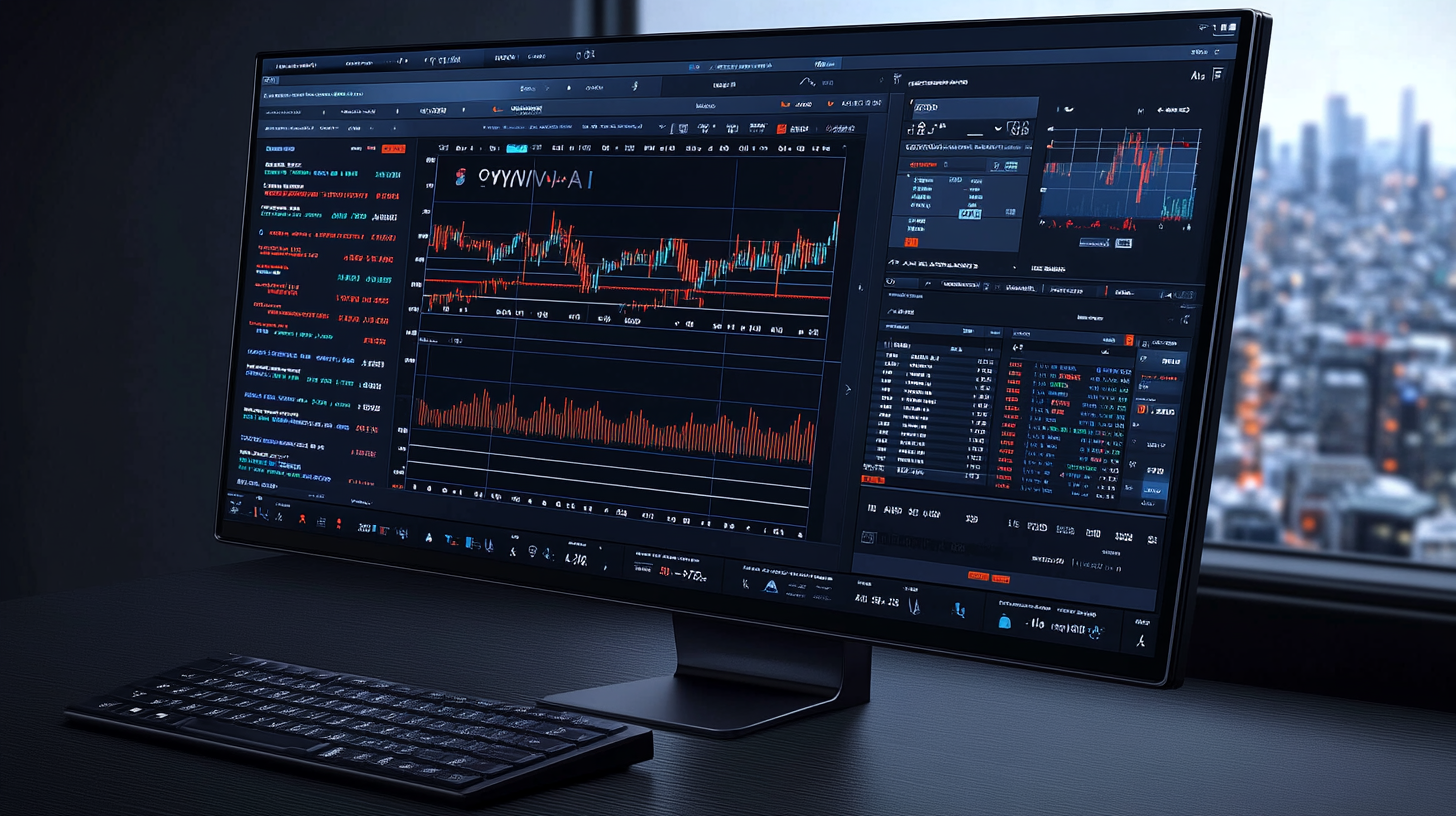
From a product-builder’s lens, the proprietary WebTrader is designed for fast iteration: watchlists are prominent, order tickets are uncluttered, and the overall latency felt steady during the NY overlap when I stress-clicked between charts. Order types covered the basics I needed (market, limit, stop, and stop-loss/take-profit), but you don’t get the deep plugin ecosystem that makes MT4/MT5 attractive for quant-ish workflows. Execution behavior on a small EUR/USD market order was consistent with what I’d expect in this segment—fills were quick, and I didn’t see platform-level “requote” friction, though slippage is still a reality around headlines.
Faredione App: Mobile Trading Experience
The Faredione app is functional in the way I care about: real-time quotes, quick position edits, and a clean pathway from portfolio to deposit/withdrawal screens. My Faredione login held stable across sessions, and biometric unlock worked on iOS during my test week. One-tap close is available, which is underrated when you’re de-risking into volatility. The main quirk: chart space is tight in landscape, so drawing tools feel more “check levels” than “do deep technical analysis.”
Charting, Tools & Research
Tooling is “enough to trade, not enough to replace a full research stack.” You get multi-timeframe charts with the usual indicators (MA, RSI, MACD, Bollinger) plus basic drawing, an economic calendar, and a lightweight news feed for context. Alerts and watchlists are there, but advanced strategy testing and institutional-grade depth-of-market aren’t the point. If you live inside MT5 or cTrader analytics, you’ll feel the ceiling; if you just need clean charts and risk controls, it’s fine.
Faredione Account Opening & Minimum Deposit
My signup path started with the standard identity footprint—email, phone, and a short personal details form—then moved quickly into KYC prompts inside the client dashboard. Verification required a government-issued photo ID and a proof of address dated within three months; my documents were approved the same business day. What I liked: the broker didn’t wait until withdrawal to spring compliance checks, which reduces the “surprise friction” factor later.
- Minimum Deposit: $200 (this is the Faredione minimum deposit I saw at funding)
- Funding Methods: Visa/Mastercard, bank wire, regional e-wallets, and crypto deposits (BTC, USDT)
- Demo Account: $10,000 virtual balance for platform familiarization and strategy rehearsal
- Account Types: Standard (spread-only) and Raw/ECN-style (tighter spread + $7 round-turn/lot commission)
Depositing with USDT credited after network confirmation and the platform displayed the updated margin available immediately, which made it easy to sanity-check leverage math before taking risk. For anyone optimizing operational safety, I’d still recommend matching deposit and withdrawal rails (e.g., card-to-card, crypto-to-crypto) to reduce compliance questions.
Faredione Customer Support Review
I tested support with a practical trader question: “Where do you see swap/overnight rates for XAU/USD, and do they change on triple-swap days?” Live chat replied in about three minutes with the exact menu path and a short explanation of Wednesday/Friday financing behavior by asset class; the tone was informational, not salesy. I also sent an email asking about Faredione withdrawal processing cutoffs, and the ticket came back in roughly eight hours with method-specific timing guidance.
Coverage ran on the expected 24/5 rhythm, with weekend responsiveness tapering unless you’re using self-service FAQs inside the portal. Language support felt region-dependent, and I didn’t see consistent phone availability—typical for offshore-first brokers that rely on chat queues. Relative to peers, it’s competent: not concierge-level, but not a ghost town either.
Ready to Explore Faredione?
If you’re considering an offshore CFD broker, the smartest move is to validate the platform yourself: open a demo, inspect live spreads during your usual session, and read the financing rates before holding positions overnight. Confirm your country eligibility and withdrawal method upfront so there are no surprises later.
Faredione Review FAQ
Is Faredione good for beginners?
Yes, Faredione can work for beginners who keep position sizes small and actually use the demo first. The interface is simple and the $200 entry point is manageable, but the availability of 1:500 leverage raises the risk of fast losses. If you’re new, treat it like a training environment, not a shortcut to returns.
Can I trade crypto on Faredione?
Yes, crypto trading is available via crypto CFDs (for example BTC/USD and ETH/USD). You’re trading a derivative contract, so you won’t be sending coins to an on-chain wallet. Pay close attention to spread widening and weekend financing if you hold positions.
Is Faredione a scam?
No—based on my 2026 testing, it behaved like a functioning broker: KYC was enforced and withdrawals were processed within the communicated window. The bigger issue is not “scam vs. not scam,” but that it’s offshore, so investor protections and complaint pathways are typically weaker than Tier‑1 jurisdictions. Always size risk assuming CFDs can move against you quickly.
Is Faredione available in the USA?
No, Faredione is not available to USA residents. The platform blocks onboarding from restricted jurisdictions and may reject accounts during KYC review. If you’re in the US, you’ll need a broker registered for US rules.
How long does a Faredione withdrawal take?
A Faredione withdrawal typically clears internal processing in 24–48 hours after KYC is complete. From there, receipt timing depends on the rail: cards often land in 2–5 business days, wires in 3–7 business days, and crypto can arrive the same day. Holidays and compliance checks can extend timelines.
What is the Faredione minimum deposit?
The Faredione minimum deposit is $200 in my test flow. Some payment methods may add their own minimums or network fees (especially crypto). If you’re evaluating the broker, starting near the minimum keeps the learning cost capped.
Does Faredione have a mobile app?
Yes, there’s a Faredione app for iOS and Android. It supports charting, order placement, and account management features like deposits and withdrawals. It’s strong for monitoring and risk actions; deep analysis is still easier on desktop.
Final Verdict: Should You Use Faredione in 2026?
Overall Score: 4.0/5
What I’d tell a founder friend who trades: Faredione nails the “ship fast” product vibe—clean UI, a usable mobile stack, and pricing that’s credible if you choose the right account tier. My deposit-to-trade-to-withdraw loop worked, and support answered operational questions without pushing upsells. The non-negotiable reality is the offshore posture and 1:500 leverage: great for flexibility, weaker for formal protections. If you use it, use it like a high-voltage tool—tight risk limits, respect margin calls, and remember CFDs are leveraged instruments where capital is at risk. For the full platform flow, start here: Faredione.
Best for: active CFD traders who want Raw-style pricing and multi-asset access in one dashboard. Avoid if: you require Tier‑1 regulation, deep institutional research, or you’re prone to over-leveraging.