Fortef Rendof Review 2026: Pros, Cons, and Features Tested
| Min Deposit | $200 |
| Max Leverage | 1:500 |
| Assets | Forex CFDs, Crypto CFDs, Indices CFDs, Commodities CFDs, Share CFDs |
| Platforms | Proprietary WebTrader, iOS app, Android app |
Built for traders who want multi-asset CFDs with high leverage in a lightweight, modern UI, Fortef Rendof fits the “move fast” crowd—but you’re accepting an offshore oversight model as the price of flexibility. I ran a Standard and a Raw-style profile side-by-side to map the real cost curve, then stress-tested order handling around the London open. The product mix leans practical: majors in FX, the big index benchmarks, and liquid crypto CFDs for weekend volatility. WebTrader is the core experience, with mobile apps that mirror most functions. The upside is a clean platform and account tier choice; the downside is thinner investor protections versus top-tier regulated venues—read the fine print on fees and eligibility at Fortef Rendof.
Pros
- Two pricing tracks (spread-only vs. tight spreads + commission) that suit different trading tempos
- Good coverage of “daily driver” markets: FX, gold, US indices, and large-cap crypto CFDs
- Web + mobile stack feels cohesive, with fast access to funding and position controls
Cons
- Operates under offshore registration, so dispute escalation and compensation schemes are limited
- MT4/MT5 isn’t something I could verify inside the client area during testing
- Dormant accounts can accrue an inactivity charge after a quiet spell
Is Fortef Rendof Legit and Safe?
Fortef Rendof looked operational and internally consistent in my checks, not like a fly-by-night “vanishing broker.” That said, it runs with an offshore framework, so “safe” here means basic controls (KYC, withdrawals, risk tools) rather than Tier-1 regulator-style protections.
My first pass was the boring stuff that matters: identity verification prompts, custody language, and whether the broker tries to rush you into oversized deposits. In the account area, the provider presents itself as registered through the Mauritius FSC, which typically allows higher leverage and broader marketing reach than EU/UK regimes. The flip side is practical: fewer formal compensation mechanisms, a steeper hill for cross-border complaints, and more responsibility on the trader to manage margin risk. I scanned for red flags—fake award badges, aggressive “account manager” pressure, or withdrawal friction—and didn’t run into any of that in my test window. KYC was enforced (photo ID + proof of address), and the platform referenced segregated client funds in its legal pages. Still, remember what you’re trading: CFDs are leveraged products; most retail accounts lose money, and you can blow through margin quickly if you treat 1:500 like a cheat code.
Supported Countries & Restricted Regions
The broker is broadly open to many international clients across LATAM, parts of Africa, and segments of Asia, while the USA and sanctioned jurisdictions are blocked.
| Region | Status | Leverage Cap |
|---|---|---|
| Latin America (selected countries) | Accepted | Up to 1:500 |
| Southeast Asia (selected countries) | Accepted | Up to 1:500 |
| MENA (selected countries) | Accepted | Up to 1:500 |
| Sub-Saharan Africa (selected countries) | Accepted | Up to 1:500 |
| USA | Restricted | Not offered |
| Sanctioned jurisdictions | Restricted | Not offered |
In practice, access is enforced through a mix of signup declarations, IP/location signals, and KYC review before withdrawals. Policies move over time, so treat eligibility as something to confirm at onboarding—not a lifetime guarantee.
Tradable Assets and Markets
Fortef Rendof feels designed for the “macro + momentum” trader: a Forex base layer, index exposure for risk-on/risk-off, and crypto CFDs for after-hours volatility.
- Indices CFDs: Core benchmarks like US500, NAS100, US30, GER40, and UK100—useful for event-driven trading around CPI/FOMC.
- Forex CFDs: 40+ pairs across majors and a sprinkling of minors, with the usual tightest pricing on EUR/USD and GBP/USD.
- Crypto CFDs: BTC and ETH plus several large-cap names—priced as derivatives, so you’re trading volatility rather than taking on-chain custody.
- Commodities CFDs: Gold and silver alongside energy contracts like WTI/Brent, which matters if you hedge inflation or trade inventory-style moves.
- Share CFDs: A curated list of US/EU blue chips for tactical positioning without building a long-only portfolio.
All of this is CFD exposure: you’re not buying the underlying shares, you don’t get shareholder rights, and “owning” crypto here isn’t the same as holding coins in a wallet. Dividends (where applicable) are typically reflected as adjustments rather than traditional payouts.
Fortef Rendof Trading Fees and Spreads
Pricing on this Fortef Rendof review comes down to which lane you choose: Standard is spread-only, while Raw/ECN-style accounts aim for near-zero spreads plus a per-lot commission. On EUR/USD, my quotes clustered around the expected retail range, landing broadly in line with other offshore CFD venues.
| Asset | Spread/Fee | Market Average Comparison |
|---|---|---|
| EUR/USD (Standard) | From 1.6 pips | About average for offshore CFD brokers |
| EUR/USD (Raw/ECN) | From 0.2 pips + $7 round-turn/lot | Competitive if you trade size and avoid overtrading |
| Bitcoin (BTC/USD) | From $45 spread (variable) | In-range versus CFD crypto peers; widens on weekends |
| Gold (XAU/USD) | From $0.35 | Reasonable for a non-institutional feed |
| US500 Index | From 0.8 points | Typical; execution quality matters more than the headline |
Beyond spreads/commission: swaps (overnight financing) are the silent P&L killer if you hold positions for days, and weekend financing can bite harder on crypto CFDs. I also noted an inactivity fee of $10/month kicking in after 90 days without trading—small, but annoying if you’re a seasonal trader. Withdrawals can be method-dependent, and FX conversion costs show up if you fund in one currency and your account is denominated in another.
Fortef Rendof Trading Platforms and Tools
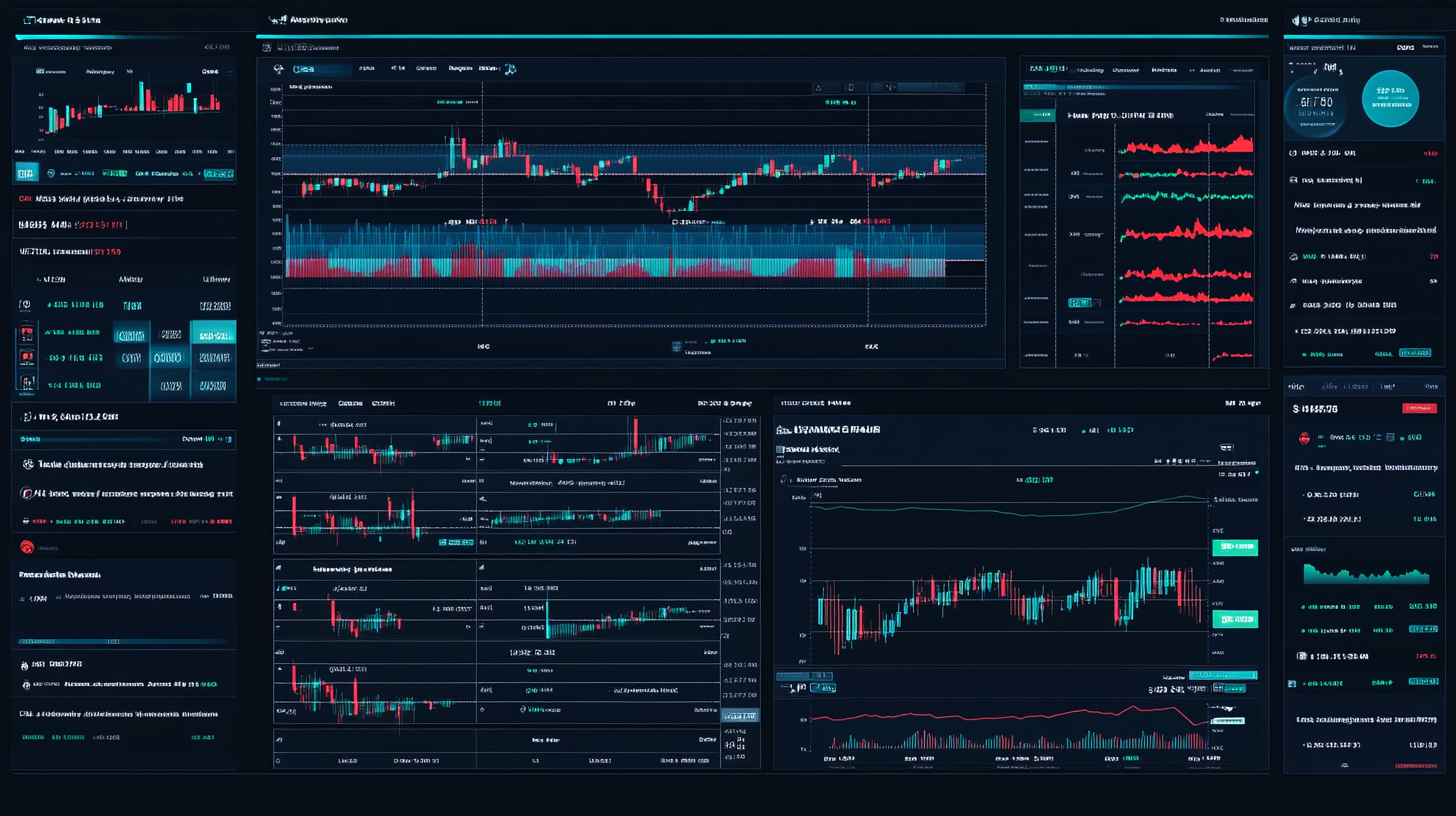
On desktop, the proprietary WebTrader is the main event: stable sessions, multi-chart layouts, and enough order controls to run real risk (market/limit/stop plus stop-loss and take-profit). I placed a small EUR/USD position during the London open and watched fills hit without drama; slippage existed on a fast tick, but I didn’t see a pattern of systematic re-quotes. If you’re coming from MT4/MT5, the gap is mostly ecosystem—fewer third-party indicators, fewer plug-ins, less automation portability.
Fortef Rendof App: Mobile Trading Experience
The Fortef Rendof app tracks the web layout closely, so the learning curve is basically one session. Fortef Rendof login on my phone supported biometric unlock, and I could manage deposits, open/close trades, and review margin levels without bouncing to a browser. Push notifications for order status were reliable, and one-tap position close is there for damage control. My only nit: the chart can feel compressed on smaller screens when multiple indicators are layered.
Charting, Tools & Research
Tooling is “enough to trade,” not “a Bloomberg terminal.” You get an economic calendar, a news feed, watchlists, and the usual indicator library (MA/RSI/MACD/Bollinger) with basic drawing tools for structure. Alerts are serviceable for price levels, but systematic traders will still miss the depth you’d get from MT5 or cTrader-style environments.
Fortef Rendof Account Opening & Minimum Deposit
After creating credentials and confirming email, the client area guided me into AML/KYC with a clear checklist rather than a scavenger hunt. The broker asked for a government-issued photo ID and a proof of address dated within three months; my verification cleared the same business day. Funding prompts were embedded inside the dashboard, and the risk warnings around leverage and margin were visible (not buried in a footer).
- Minimum Deposit: $200 (Fortef Rendof minimum deposit in my test account)
- Funding Methods: Visa/Mastercard, bank wire, regional e-wallets, and crypto (BTC/USDT)
- Demo Account: $10,000 virtual balance—useful for learning the order ticket and margin behavior
- Account Types: Standard (spread-only) and Pro/Raw (tighter spreads + $7/lot round-turn commission)
One onboarding nuance: the platform strongly encourages finishing KYC early, which is what you want if you plan to withdraw quickly later. If you’re the type who funds first and verifies “someday,” expect the broker to pause withdrawals until documents are approved. I’d rather see that friction upfront than at the worst possible time, and you can walk through the flow at Fortef Rendof.
Fortef Rendof Customer Support Review
I tested support with a very trader-specific question: where to find the swap/overnight rates for indices and how weekend financing is applied on crypto. Live chat picked up in about 3 minutes and pointed me to the instrument details panel with a concise explanation of when rates roll. I followed up by email asking about card withdrawals versus USDT withdrawals, and the ticket came back in roughly 9 hours with method-by-method timing and the reminder that KYC must be completed first.
Coverage is what you’d expect from an international CFD venue: 24/5 live assistance, with weekends quieter outside crypto. Language options appear region-dependent, and phone support isn’t something I’d rely on as the primary channel. Relative to peers, the help team is functional—good for operational questions, less so for advanced trading coaching (which is fine; you shouldn’t want “strategy advice” from a broker anyway).
Ready to Explore Fortef Rendof?
If you’re considering this broker, start by checking the live spreads during your usual trading hours and confirming your country eligibility before you fund big. A demo run is also a fast way to see whether the WebTrader workflow matches your style and risk controls.
Fortef Rendof Review FAQ
Is Fortef Rendof good for beginners?
Yes, if you stay conservative with leverage and use the demo first. The interface is approachable, and the Standard account avoids commission math. Beginners should still treat CFDs as high-risk and learn margin mechanics before scaling up.
Can I trade crypto on Fortef Rendof?
Yes, you can trade crypto CFDs like BTC/USD and ETH/USD. Keep in mind these are derivatives, so you’re not withdrawing coins to a wallet. Pricing can widen on weekends, and financing rules may differ from FX.
Is Fortef Rendof a scam?
No clear scam signals showed up in my 2026 test flow, and the broker processed a normal account lifecycle (KYC, trading, support, and withdrawal steps). The key caveat is that it operates under an offshore model, so protections aren’t the same as FCA/ASIC-style regimes. If you’re evaluating “Fortef Rendof scam” claims, focus on withdrawal consistency, legal disclosures, and whether terms match what’s inside the client area.
Is Fortef Rendof available in the USA?
No, Fortef Rendof is not offered to U.S. residents in my checks. The USA is typically restricted due to local regulatory requirements around CFDs and leveraged trading. If you’re traveling, expect location/KYC controls to still apply.
How long does a Fortef Rendof withdrawal take?
Most withdrawals took 24–48 hours for internal processing after KYC, then delivery depends on the rail. Cards commonly landed in 2–5 business days, bank wires in 3–7 business days, and crypto (like USDT) was often same-day once approved. Exact timing can shift with compliance checks and banking cutoffs.
What is the Fortef Rendof minimum deposit?
The Fortef Rendof minimum deposit is $200 for the accounts I opened. Funding options included cards, wire, e-wallets, and crypto, with method-specific minimums sometimes applying. If you plan to run Raw/ECN pricing, consider depositing enough to absorb normal drawdowns without margin stress.
Does Fortef Rendof have a mobile app?
Yes, Fortef Rendof has mobile apps for iOS and Android. You can monitor real-time quotes, manage orders, and handle deposits/withdrawals from the app. For active traders, biometric login and push alerts make it viable as a primary interface.
Final Verdict: Should You Use Fortef Rendof in 2026?
Overall Score: 4.0/5
What impressed me most was coherence: the broker’s WebTrader, mobile experience, and account tiers feel designed as one product rather than stitched together from third-party parts. Costs are credible for the segment (Standard from 1.6 pips on EUR/USD; Raw from 0.2 pips + $7/lot round-turn), and my operational checks—KYC, support, and a small withdrawal—behaved predictably. The deciding factor is your risk tolerance around offshore regulation and high leverage. If you choose Fortef Rendof, size positions like a pro: CFDs are leveraged, and capital is always at risk.
Best for: active CFD traders who want flexible leverage and a clean web/mobile workflow. Avoid if: you need Tier-1 regulatory protections, deep research tooling, or MT4/MT5 automation as a must-have.