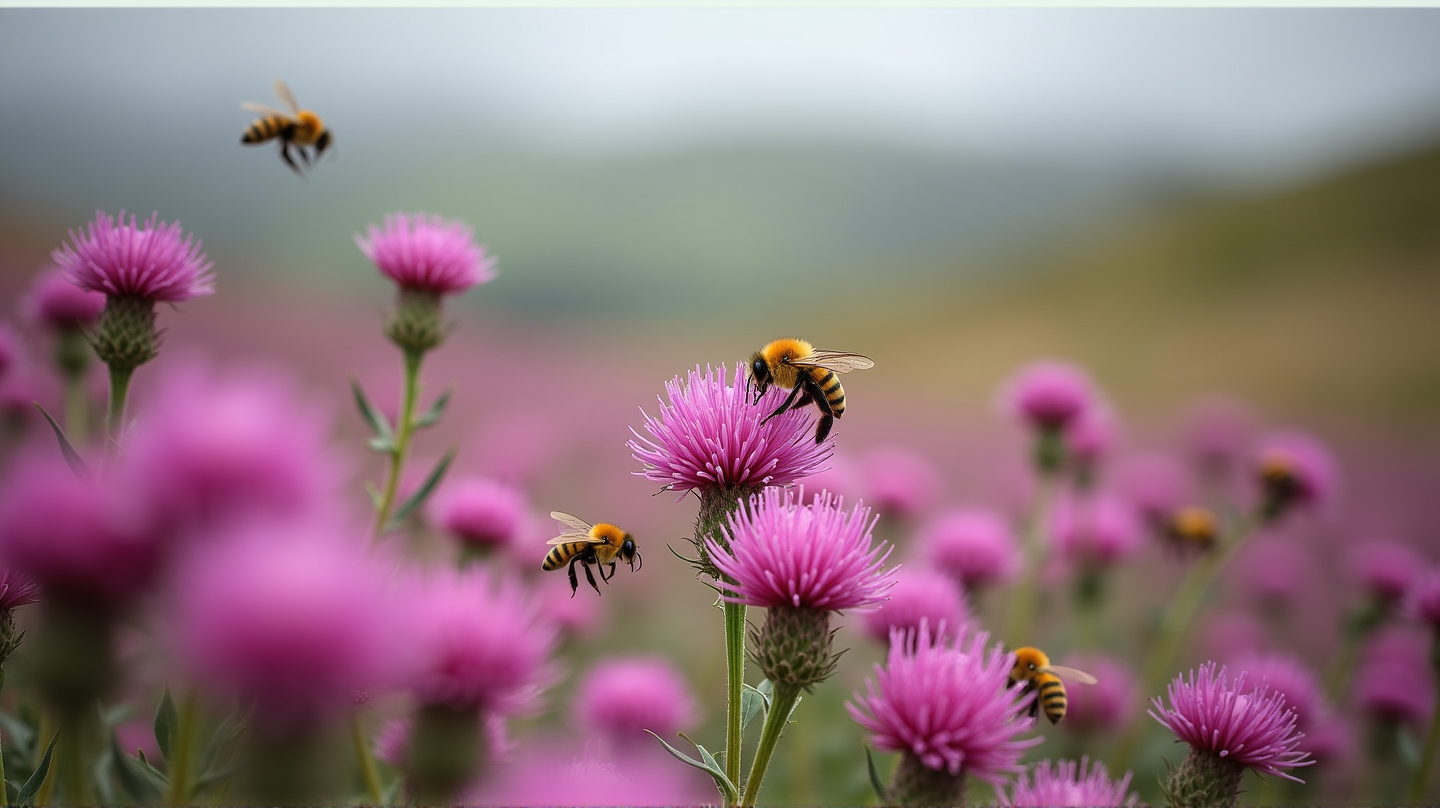
In the picturesque Wicklow Mountains of Ireland, an unexpected ecological drama unfolds annually as the late-summer heather bloom attracts not just local pollinators, but also a wave of human-managed honeybees. This influx creates a unique challenge for the resident bumblebee populations, and researchers are keen to understand the impacts.
Bumblebee vs. Honeybee: A Size Dilemma
As beekeepers transport large numbers of honeybee hives to the blooming uplands, local bumblebees—such as the white-tailed and small heath bumblebees—find themselves in fierce competition for the region’s nectar resources. Observations indicate that, in areas heavily populated by honeybees, the local bumblebees are markedly smaller in size compared to those in less crowded areas.
Behavioral Shifts in the Hive
According to research published in Proceedings of the Royal Society B: Biological Sciences, this competition leads to notable changes in bumblebee behavior. Scientists observed an increase in pollen foraging among the smaller bumblebees, suggesting a shift in priorities towards nourishing the next generation in the face of scarcity.
Ecological Implications and Future Considerations
These findings beckon a call for more thoughtful hive placement strategies by beekeepers. Ecologists, including Dave Goulson of the University of Sussex, argue that areas rich with natural reserves should be shielded from an artificial bee deluge, ensuring the survival of indigenous pollinator communities.
A Delicate Balance
As natural pollinators face an era of decline, understanding and mitigating the effects of human actions becomes crucial. While trucked-in honeybees can benefit agricultural landscapes, the balance in ecologically sensitive areas such as Ireland’s heather-laden highlands needs careful consideration to support biodiversity.
In a world increasingly dominated by human intervention, small gestures of ecological responsibility can preserve the harmonious buzz of nature, according to Science News.