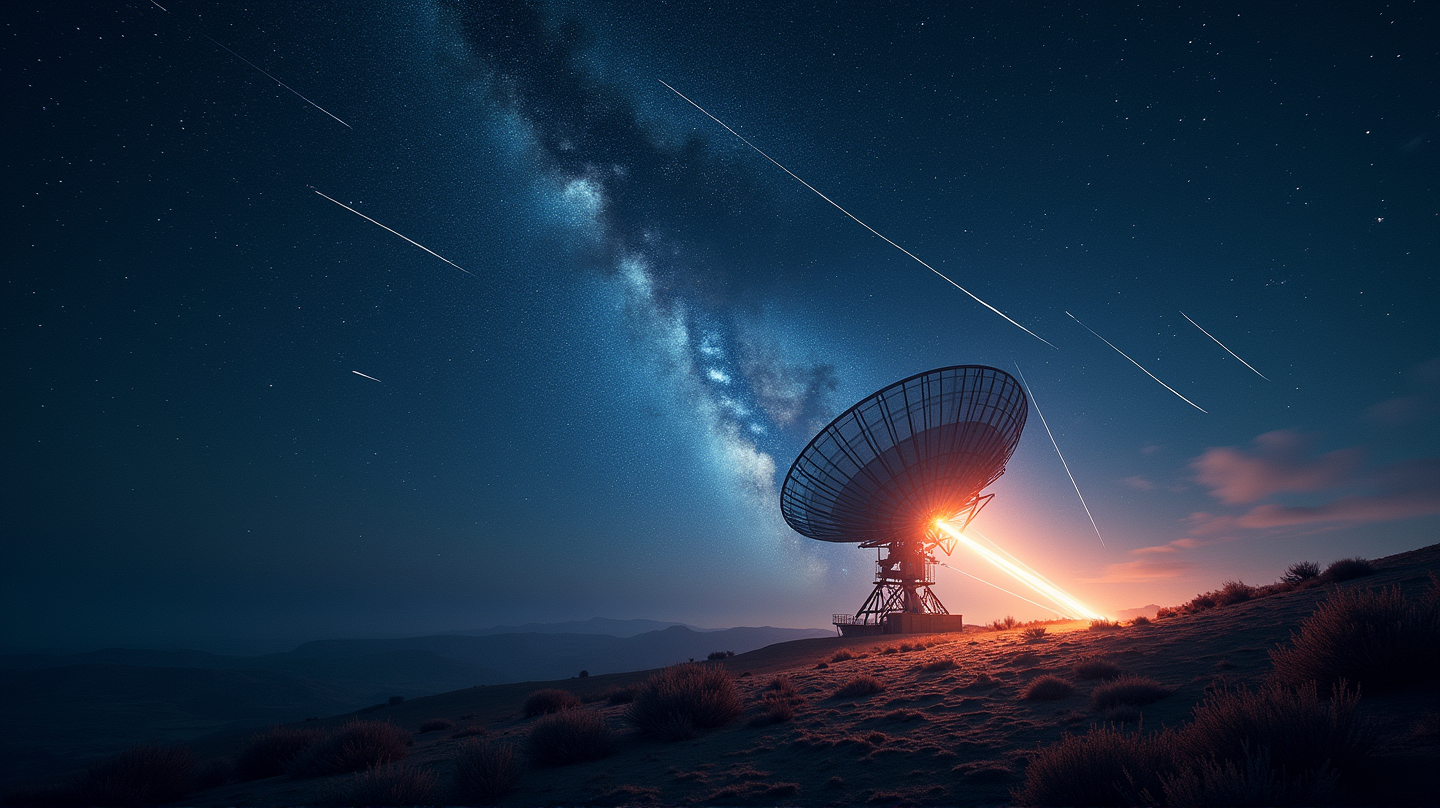
Introduction to the Satellite Boom
In the last decade, humanity has witnessed an unprecedented rise in the number of artificial satellites orbiting our planet. Catalyzed by reduced launch costs and new superheavy launchers, the telecommunication industry’s hunger for connectivity is driving a satellite boom. If all proposals are fulfilled, we might soon see half a million satellites enveloping Earth, painting streaks across the dark canvas of our night sky.
Megaconstellations: An Astronomical Challenge
The trail of satellite constellations such as Starlink has already started interfering with some of the most significant astronomical instruments of our time. The Hubble Space Telescope, for instance, has witnessed trail contaminations in about 4% of its images between 2018 and 2021, and this figure is set to rise sharply. Space telescopes like SPHEREx, ARRAKIHS, and Xuntian are projected to have over 96% of their exposures impacted, with dozens of trails per snapshot.
Satellite Trails: An Unseen Nuance
Satellite trails are more than mere streaks; they are complex distortions affecting the integrity of astronomical data by increasing background light and photon noise. While mitigation efforts have focused on reducing satellite visibility through dimmer designs like DarkSat and VisorSat, the issue persists, especially with new satellites sporting larger, more reflective surfaces.
Confronting the Spectral Pollution
The spectral brightness of satellite trails is alarming, often overshadowing the light from distant celestial bodies astronomers aim to study. Ranging from 18 to 23 mag arcsec−2, these trails sit well above detectability limits. The impact is not confined to optical light but spans the entire electromagnetic spectrum, disrupting valuable research into the cosmos.
Strategies for Mitigation and Future Directions
In response, the astronomical community urges proactive measures: proposing caps on satellite reflectivity, establishing precision tracking of satellite orbits, and formulating robust prediction models to screen and correct this new-age light pollution. Engaging satellite operators in these discussions is crucial to find a harmonious coexistence between connectivity ambitions and the serenity of the star-studded skies.
Conclusion: A Call to Safeguard the Final Frontier
The era of ubiquitous satellite constellations is upon us, threatening the clarity and purity of our cosmic vistas. As stated in Nature, robust interventions are needed to ensure that the quest for understanding our universe continues unperturbed by the shadows of progress.
While the dialogue intensifies, the astronomical community stands resilient, ready to innovate and advocate for solutions that respect both technology’s grasp and humanity’s gaze upon the stars.