When President Trump rolled out his new national security strategy (NSS), it was impossible to miss the tectonic shift in tone and focus. Quietly dropped from the document are the confrontational narratives of China as a geopolitical adversary, once an echo resounding throughout past administrations.
The Emphasis on Economic Rivalry
Underlining this transformation, the NSS astonishingly relegates China’s mention until much later, highlighting a pivot towards economic rivalry over former ideological confrontations. John Sacks from the Council on Foreign Relations noted a marked departure, saying, “China is viewed more as an economic competitor.” Wen Ti-Sung of the Atlantic Council underscores the transition as one of “interests over values.”
An Apparent Diplomatic Diplomacy
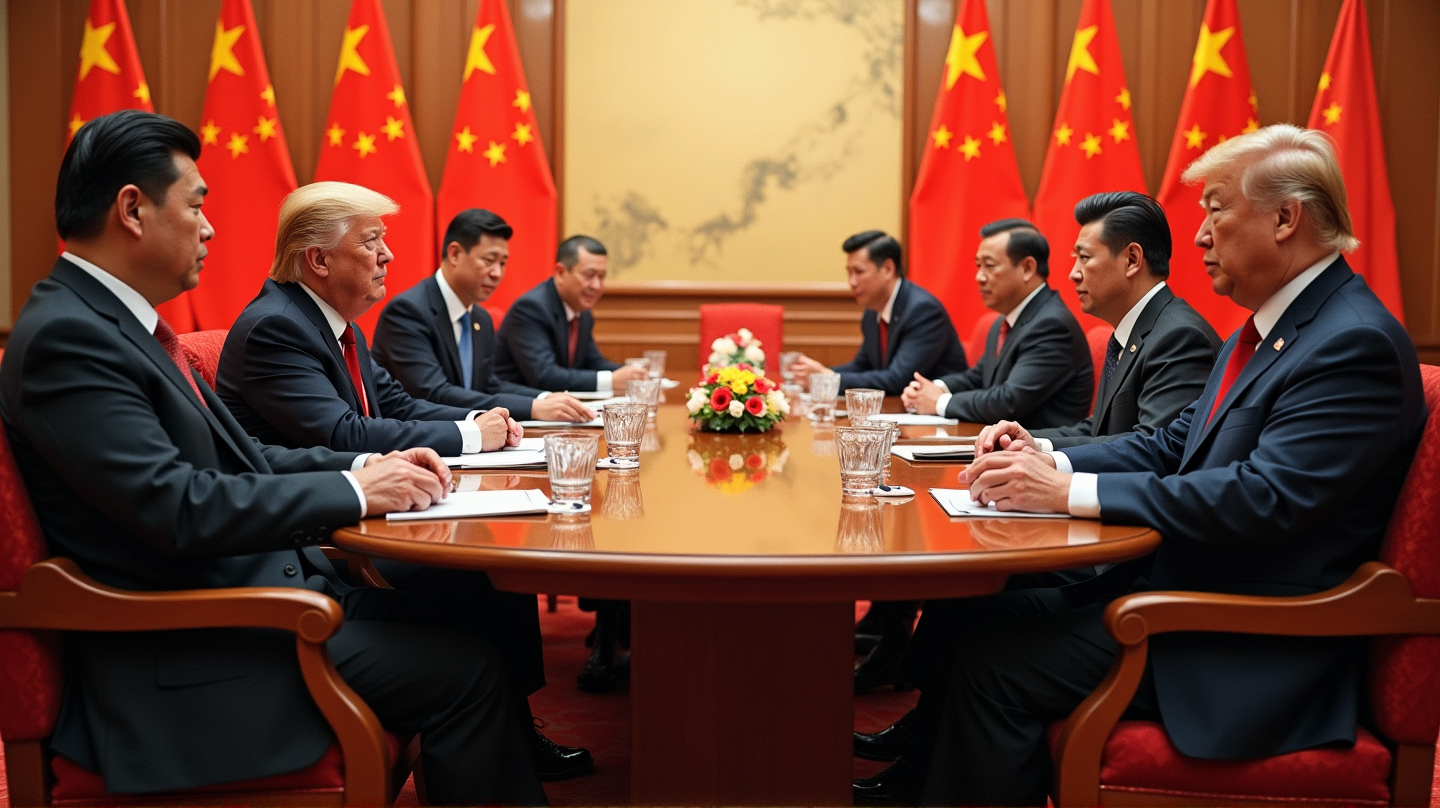
Ensuring not to upset the brewing diplomatic relations, the economy took precedence with phrases like “mutual respect, peaceful coexistence, win-win cooperation” from China’s Ministry of Foreign Affairs bringing a rare tone of cautious optimism from Beijing. Such diplomatic warming was palpable, with the anticipation of Trump’s upcoming visit to Beijing hanging in the air. According to CNN, this visit could redefine future US-China relations.
Strategic Ambitions and Subtle Warnings
However, the NSS is far from abandoning strategic ambitions. It retains a wary eye on issues like Taiwan, highlighting its geopolitical importance due to its semiconductor industry dominance. Still, the report strategically softens its stance in other areas, sending Beijing mixed messages and leaving observers, particularly in Taiwan, in a suspenseful “wait and see” mode.
Balancing Priorities - A Complex Dance
While there’s a noticeable softening of language, it’s essential not to mistake this as a full retreat. The Global Times cautions against viewing this strategic shift as indicative of reducing competitive tension. The document’s language may indeed be tactical, seeking advantageous positioning rather than wavering resolve.
Economic Stakes: A Bold Declaration
The NSS unambivalently declares economics as “the ultimate stakes,” a fundamental refocusing that will reverberate across global diplomatic landscapes. With both countries recognizing mutual economic damage potentials, this shift symbolizes a larger recalibration, echoing lessons learned from recent trade conflicts.
Taiwan: A Geopolitical Flashpoint
Taiwan remains a significant focus, with the NSS dedicating notable attention. Yet, a softened language juxtaposed with assertive deterrence highlights America’s delicate balancing act in the region.
In this complex field of diplomatic chess, the NSS is more than a static document; it serves as both a beacon and a puzzle in America’s renewed strategy towards China. Only time will reveal the efficacy and enduring impact of this recalibration in global geopolitical dynamics.